Log019
What Is a Croupier? Meaning, Origins and the Job at the Table
- Logged
- Reading time
- 4 min
- Section
- B Casino Gambling
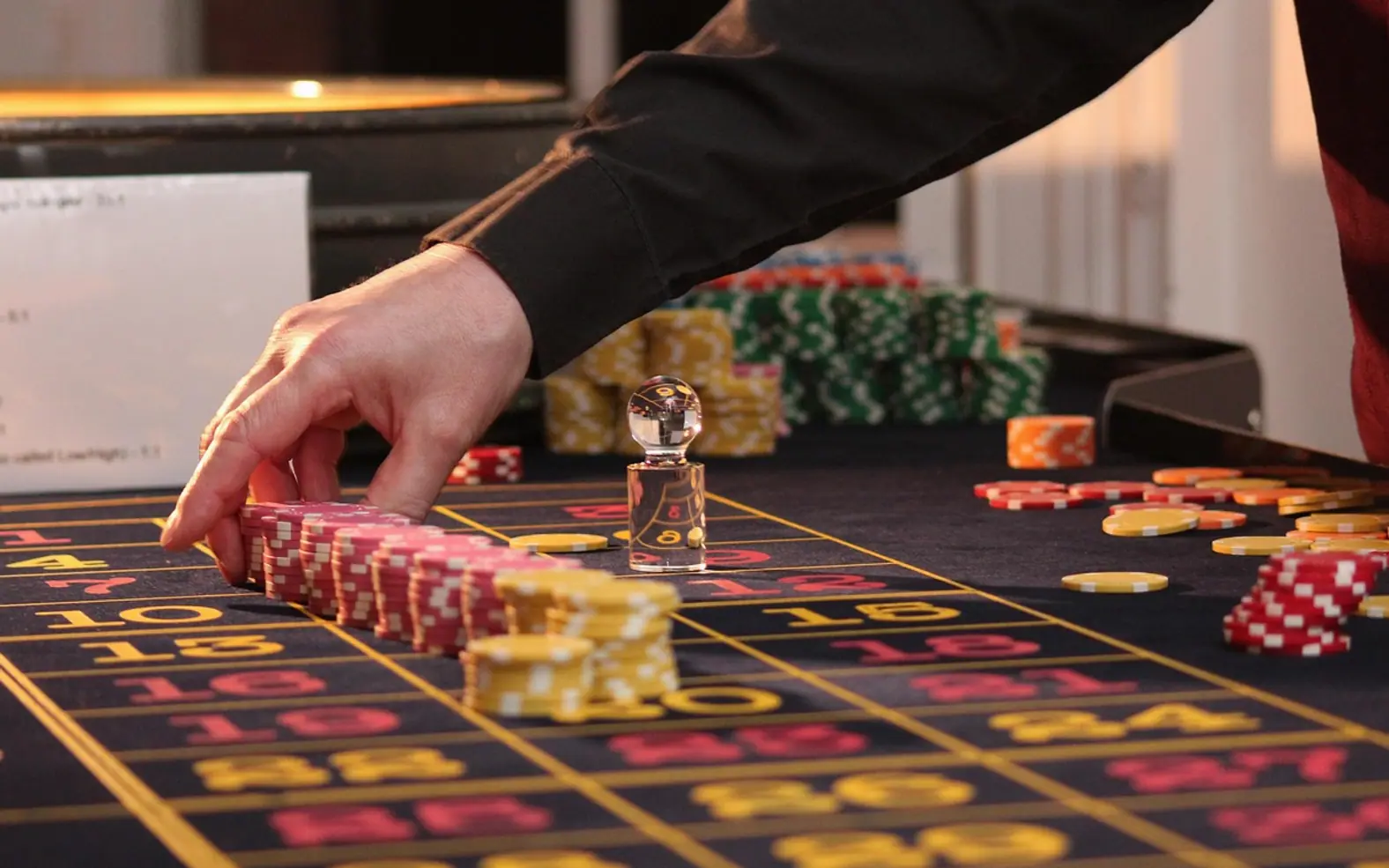
A croupier is the casino employee who runs a table game. They open and close the betting, spin the roulette wheel or deal the cards, gather the losing stakes and pay the winning ones at the published rates. In much of Europe the word covers almost every table worker; in the United States "dealer" is the everyday term, and "croupier" tends to be kept for roulette and baccarat. The word itself is French, and its first home was not a gaming room but the back of a horse.
Croupier meaning and where the word comes from
In French, the croupe is the rump or hindquarters of a horse. A croupier was originally a person who rode behind the main rider, sitting on the croupe. The idea of "the one behind" then moved to the card table, where a croupier was someone standing at a gambler's shoulder, backing the player with money or advice. Over time the word shifted sides and came to mean the person who runs the game for the bank. English borrowed it along with the French gaming vocabulary of the eighteenth and nineteenth centuries. The same root sits inside "crupper", the strap that runs under a horse's tail to hold the saddle in place.
English speakers usually pronounce it "KROO-pee-ay", keeping the French ending, or "KROO-pee-er".
What a croupier actually does
The job looks like spinning and dealing, but most of it is managing money and pace. A shift at a roulette table typically involves:
- Running the rhythm of the game. In French-style roulette the calls are faites vos jeux ("place your bets") and rien ne va plus ("no more bets") once the ball is about to drop.
- Spinning and marking. Launching the ball against the wheel's rotation and placing a marker, often called a dolly, on the winning number.
- Clearing and paying. Removing losing chips first, then calculating and paying each winning bet, which takes quick mental arithmetic: a straight-up number pays 35 to 1, a split 17 to 1, and so on.
- Changing money. Swapping cash for chips and, at American tables, selling each player a separate colour of wheel chips.
- Watching the layout. Refusing late bets, spotting mistakes and calling a supervisor when a dispute or doubt arises.
The French terms are a living link to roulette's past, a story covered in our look at who invented roulette.
Croupier, dealer and the rest of the pit
| Role | Where you see it | Main tasks |
|---|---|---|
| Croupier | Roulette and baccarat; most tables in Europe | Runs the game, settles every bet |
| Dealer | Blackjack, poker and other card tables | Shuffles, deals, settles hands |
| Stickman | Craps | Moves the dice with a hooked stick and calls each roll |
| Boxman | Craps | Sits at the table to supervise chips and payouts |
| Pit boss | A group of tables, known as the pit | Oversees staff, settles disputes, watches for problems |
Tools of the trade
The croupier's best-known tool is the rake, a long-handled stick used to draw chips across a wide roulette layout or to pass cards and chips at old-style baccarat tables. Big baccarat tables use a flat paddle for the same reason. Card games add a dealing shoe and, in many casinos today, an automatic shuffler. In poker rooms "rake" means something else entirely, the fee the house takes from each pot, which is a reminder of how much of the casino's vocabulary started at the roulette table.
Older games had their own specialists. The faro tables of the nineteenth century needed a dealer and a casekeeper working side by side, a set-up described in our guide to faro and bucking the tiger.
Training, rules and tips
Croupiers learn at dealing schools or through in-house training, practising chip handling, payout sums and procedure until they are automatic. In many places table staff must also be registered with or licensed by the gaming regulator before they can work. Procedures are strict for good reason: a croupier leaving the table usually "clears their hands", showing both palms front and back to the cameras to prove nothing is being carried away. Tips, often called tokes, are pooled among staff in many casinos rather than kept by whoever received them, though house rules differ.
Many croupiers now work in studios too, running real wheels and card tables that are streamed to players online.
Myths about croupiers
Can a croupier aim the roulette ball?
The idea of a "dealer signature", a habit that sends the ball to the same part of the wheel, is an old table legend. There is no reliable evidence that a croupier can do this on purpose on a modern, well-kept wheel, and table procedures usually ask staff to vary the speed and alternate the direction of their spins. Believing you can read the croupier is a close cousin of the illusion of control.
Does the croupier want you to lose?
No. Their pay does not rise or fall with your result. The house advantage is built into the payouts themselves, which is why switching tables because a croupier seems "cold" makes no difference, and why expecting a change of luck is the gambler's fallacy at work.
Is a croupier the same as a dealer?
Broadly, yes. The words describe the same kind of job; which one you hear depends on the game and the country.
Whoever stands behind the wheel, the payouts are designed so the house comes out ahead over time. Table games are for adults only and legal only in some places, so check where you are, agree a spending cap with yourself before you buy chips and walk away when it is used up.