Log022
Riverboat Gambling: From Mississippi Steamboats to Floating Casinos
- Logged
- Reading time
- 4 min
- Section
- B Casino Gambling
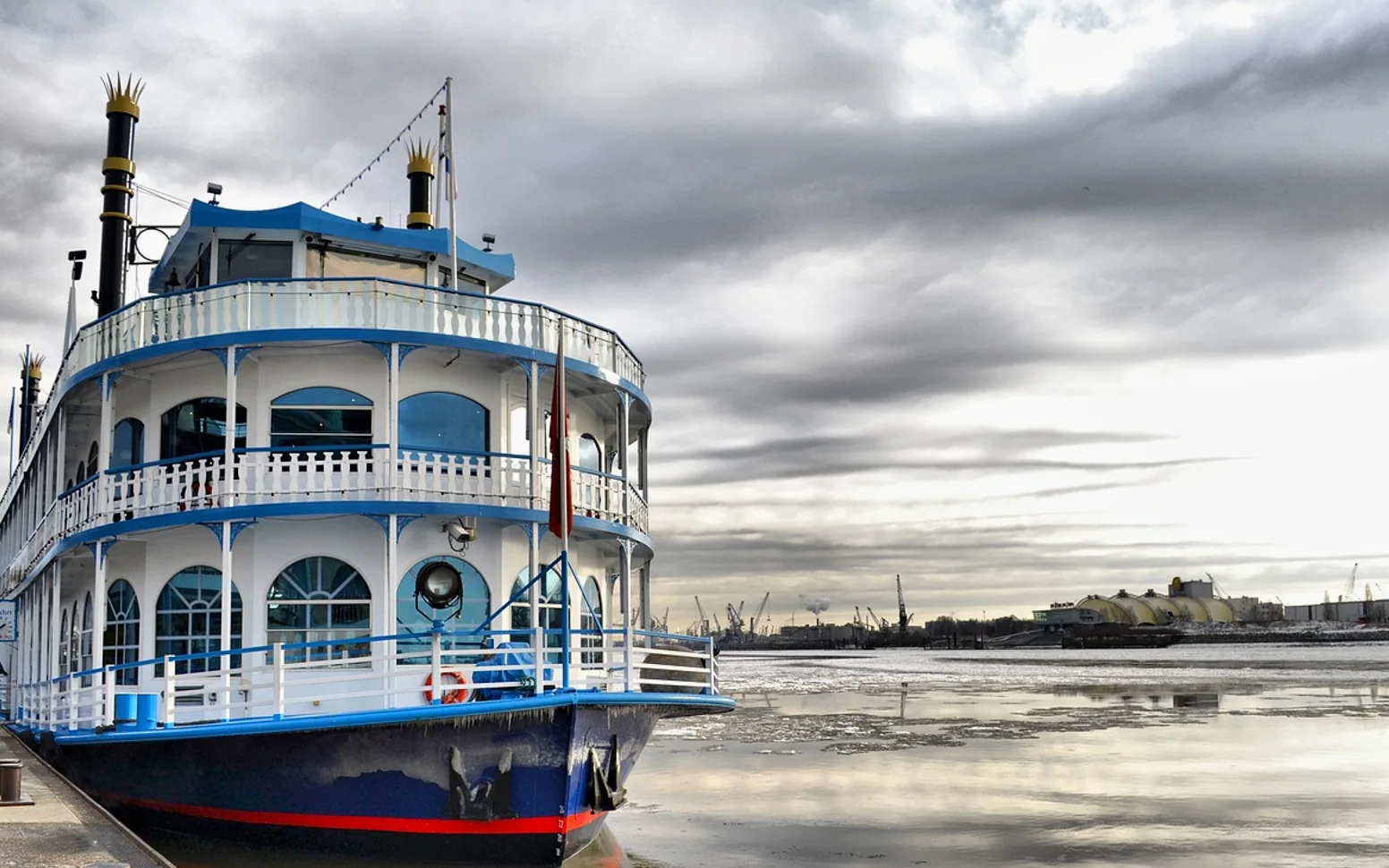
Riverboat gambling refers to two separate chapters of American history. The first is the card play that thrived aboard passenger steamboats on the Mississippi and Ohio rivers in the decades before the Civil War, when professional gamblers worked the boats' saloons. The second is the wave of state-licensed riverboat casinos that began when Iowa legalised them in 1989. Between those chapters sits the gambling of the Old West, which inherited the steamboat games and carried them into mining camps and cattle towns.
Steamboats and their saloons
Steam-powered boats reached the lower Mississippi in the 1810s, and within a generation they were carrying passengers, cotton and cash between New Orleans and upriver ports such as Natchez, Memphis and St. Louis. Trips lasted days. Planters, merchants and travellers had money in their pockets and little to do, and the larger boats offered a saloon with a bar and card tables. Gambling filled the hours.
The games on board reflected the river's mix of French and American habits:
- Poker, which is widely believed to have spread up the river from New Orleans and owes much of its early reputation to the boats.
- Faro, the banking game covered in our guide to faro and bucking the tiger.
- Early twenty-one, the game traced in vingt-et-un and the roots of blackjack.
- Three-card monte and other confidence tricks, which were swindles dressed up as games and offered no fair chance at all.
The professional riverboat gambler
Popular culture remembers the riverboat gambler as a polite gentleman in a fine waistcoat. The real trade was rougher. Professionals often posed as merchants or planters, worked in teams, used marked cards and signals, and swapped in "cold decks" arranged in advance. The best-known first-hand account, George Devol's memoir Forty Years a Gambler on the Mississippi, published in 1887, is lively reading but boastful, and historians treat its details with care.
River towns pushed back. In 1835 a mob in Vicksburg, Mississippi, hanged five professional gamblers, one episode in a wider backlash against gaming houses along the river in that decade. Accounts of the period suggest that pressure on land helped push professionals onto the boats themselves, where they could step off at the next landing if trouble followed.
From the river to the Old West
The steamboat era did not end with a single law. The Civil War cut river traffic, and after it the railroads took the passengers. Gambling followed the money west to mining camps, railheads and cattle towns such as Deadwood, Tombstone and Dodge City. Old West gambling took place in saloons and gaming halls where a faro bank and a poker table were as standard as the bar. Its most famous scene comes from Deadwood in 1876, when Wild Bill Hickok was shot at a poker table; by tradition he was holding black aces and eights, ever since called the "dead man's hand".
Three eras compared
| Steamboat era | Old West | Modern riverboat casinos | |
|---|---|---|---|
| When | About the 1810s to the 1860s | Mid-1800s to the early 1900s | From 1989 onward |
| Where | Mississippi and Ohio rivers | Mining camps, cattle and railroad towns | Iowa, then other Midwestern and Southern states |
| Typical games | Poker, faro, monte | Faro, poker | Slots and table games |
| Who ran it | Independent professionals | Saloon owners and faro bankers | State-licensed operators |
| Rules | Few, enforced unevenly | Town ordinances, often ignored | State gaming regulation |
The riverboat casino revival
The idea returned in a very different form. In 1989 Iowa passed a law allowing casino gambling on riverboats, and the first boats launched in 1991 with early rules that capped stakes and losses per cruise. Illinois, Mississippi, Louisiana, Missouri and Indiana passed their own riverboat laws within the next few years. Putting the casinos on water let lawmakers present them as tourism tied to river heritage and kept them away from main streets.
The water requirement loosened over time:
- Cruising rules faded. Many states dropped the need to sail, so boats could stay moored as dockside casinos.
- Boats became barges. Many "riverboats" were built as permanently moored structures that look much like land buildings from inside.
- Some casinos moved ashore. After Hurricane Katrina in 2005, Mississippi let coastal casinos rebuild on land near the water, and several states have since relaxed their water rules further.
What the legend leaves out
The romantic image skips the passengers who stepped off a boat with empty pockets, often after doubling their stakes to recover earlier losses, the trap explained in our piece on the sunk cost fallacy in gambling. A hot run at the table convinced others they could not lose, the feeling behind the hot hand fallacy. Today's floating casinos are regulated businesses rather than hunting grounds for card sharps, but their floors are planned with the same care as land casinos, as our article on casino design and architecture shows.
Do riverboat casinos still sail?
Very few do. Most operate dockside or on permanently moored barges, and some states now allow land-based buildings instead.
Why were casinos put on boats in the first place?
Partly heritage and partly politics: gambling on the water could be presented as a contained tourist attraction rather than a casino on every main street.
The paddle steamers are gone, but the odds aboard them still apply. Casino gambling is for adults only, and many US states set the entry age at 21, so check the age and the law where you are and keep any visit to a budget decided before you board.